
Australian distances are quoted in hours by people who have driven them for years, and in optimism by everyone else. The gap between those figures is where itineraries fall apart.
Three things move the number: the surface, the vehicle, and what you do when you stop.
On sealed highway
Speed limits vary, and the posted limit is not a target when weather, traffic or fatigue make it unsafe. Map the day with time for fuel, meals, roadworks and regular breaks. The Northern Territory recommends a 15-minute break every two hours of driving.
Sydney to Melbourne is 865 km, about 10 hours. Sydney to Brisbane is 908 km, roughly 11. Both get done in a day by people who then do nothing else that evening.
A loaded vehicle, unfamiliar roads and frequent stops can change your pace. Leave a margin rather than assuming a fixed percentage or relying on the fastest estimated time. To compare space and layouts, browse Wicked Campers’ campervan range before planning your daily stops.
On dirt
Gravel and corrugated roads can slow progress considerably. Dust, wildlife, water crossings and changing surfaces all affect the time required. Check current road reports and your hire agreement before setting out.
The Gibb River Road is the standard example: about 647 km between the Derby and Kununurra ends, and most people take five to seven days over it.
| Road | Planning considerations |
|---|---|
| Sealed highway | Allow for traffic, towns, fuel and rest breaks. |
| Unsealed road | Check road reports and allow more time for surface conditions. |
| Remote route | Plan supplies, a fuel reserve and a safe overnight stop. |
The rule that matters more than distance
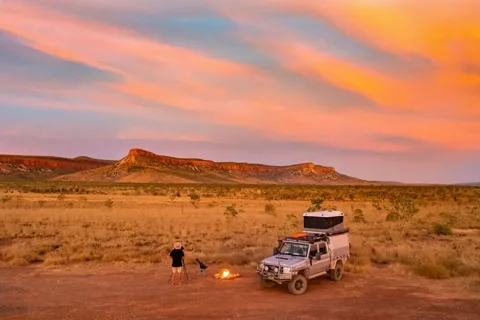
When possible, avoid remote driving at dawn, dusk and after dark, when animals and hazards can be harder to see. Plan a realistic arrival time and do not keep driving if you feel tired.
Arrive an hour before sunset, every day. That is the whole rule.
It changes the arithmetic. Sunset at 18:30, off the road by 17:30, a campervan at an effective 85 km/h with stops: about 550 km, not 800.
Work backwards from your planned stop, allowing time for rest, meals and unexpected delays. If you are drowsy, stop safely and rest; sharing the driving does not eliminate fatigue. Read the NT fatigue guidance.
What this means for a two week trip
Choose a region that fits your available days, then allocate nights for the places you want to experience. Leave space for weather and changes rather than scheduling a long drive every day.
Pick a region, give it the days it needs, and accept you will not see the rest.
When the vehicle is the decision
Choose a vehicle for the actual road surface, current conditions and your experience. Some unsealed routes require a suitable 4WD; check access and hire restrictions before departure.
Wicked Campers hires both in Australia.
For a long trip, consider the loaded vehicle and road surface when planning each day. See the Wicked Campers vehicle comparison for different vehicle layouts.
Questions people ask
Is 1,000 km a day realistic?
A 1,000 km day is a very demanding drive. Split the journey across days, plan regular breaks and stop if either driver is tired.
Can I drive the Nullarbor in one day?
No. Norseman to Ceduna alone is 1,228 km. Two long days is the minimum people actually manage, and three is comfortable.
Does a campervan slow me down much?
There is no reliable fixed percentage: pace depends on the vehicle, load, traffic and road surface. Allow extra time for an unfamiliar vehicle.